"L'essentiel est invisible pour les yeux." — Antoine de Saint-Exupery, Le Petit Prince. What is essential is invisible to the eye. The line was written by a French aviator who disappeared over the Mediterranean in 1944, and it has become one of the most quoted sentences in the French language. It is also, whether Saint-Exupery intended it or not, a precise description of what France has built in space: an empire that most people cannot see.
In Part 1 of this deep dive, we traced the visible architecture — CNES, Kourou, the Diamant rocket, the Ariane dynasty from its first Christmas Eve flight in 1979 through Ariane 6's operational ramp-up in 2025-2026, and the industrial machinery of ArianeGroup and Arianespace that turns European funding into orbital access. That story was about rockets and launch pads, about the physical infrastructure of reaching space.
This second part is about everything that happens after the rocket clears the tower. The people who ride it. The satellites it carries. The military doctrine it serves. The scientific instruments it delivers to Mars, to the Sun-Earth Lagrange points, to orbits that monitor every ocean and every continent on Earth. France does not merely launch rockets. It builds the spacecraft that sit on top of them, trains the astronauts who fly inside them, commands the military constellations that watch the world from above, and designs the instruments that are rewriting humanity's understanding of the universe. This is the invisible empire — and it is enormous.
The French Astronaut Corps: From Chretien to Pesquet
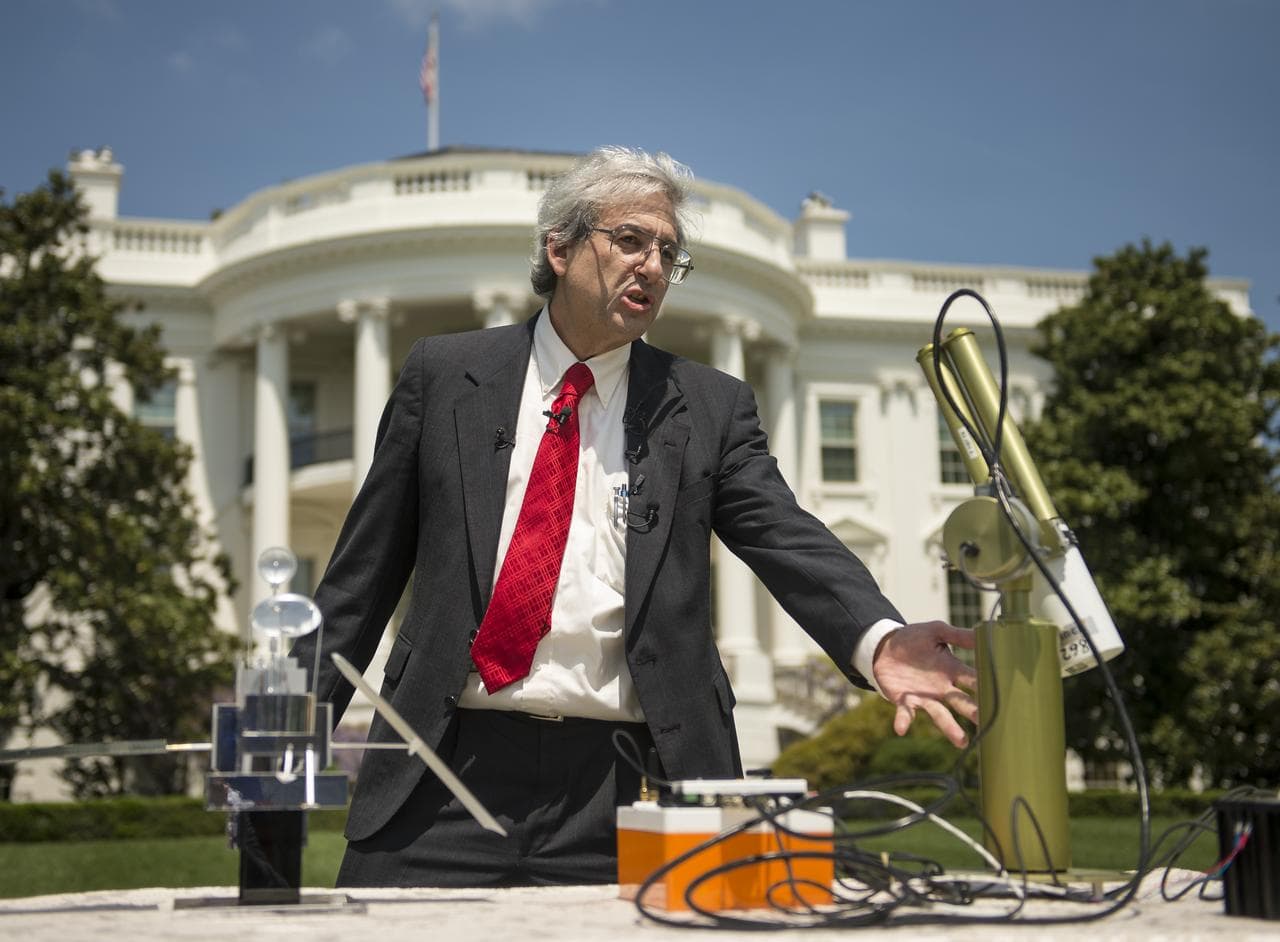
France has produced more astronauts than any other European nation, and the lineage stretches back further than most people realize. While ESA's astronaut corps is multinational by design, the French contribution to European human spaceflight has been disproportionate in both quantity and historical significance — a pattern that begins with a fighter pilot from La Rochelle who flew to a Soviet space station at the height of the Cold War.
Jean-Loup Chretien: The First Western European in Space (1982)
On June 24, 1982, Jean-Loup Chretien launched aboard Soyuz T-6 alongside Soviet cosmonauts Vladimir Dzhanibekov and Aleksandr Ivanchenkov. Their destination was the Salyut 7 space station, where cosmonauts Anatoli Berezovoy and Valentin Lebedev were already in residence. Chretien spent nearly eight days in orbit — 7 days, 21 hours, 50 minutes, and 42 seconds — conducting a program of joint Soviet-French experiments that included pioneering echography cardiovascular monitoring systems.
The political context was extraordinary. This was 1982. NATO and the Warsaw Pact were locked in nuclear confrontation. The Soviet Union had invaded Afghanistan three years earlier. And yet here was a French Air Force colonel, a test pilot who had flown Mirage fighter jets, floating inside a Soviet space station and conducting cooperative science experiments. The mission was the product of a 1966 agreement between CNES and the Soviet Academy of Sciences — one of the earliest space cooperation accords between a Western nation and the USSR — and it reflected France's characteristic insistence on maintaining diplomatic channels that other Western nations considered unthinkable.
Chretien became the first Western European in space, and the first non-American from a Western-aligned nation to fly in orbit. He would return to space twice more: aboard Soyuz TM-7 in 1988 for a 25-day mission to the Mir space station, during which he performed France's first spacewalk, and aboard the Space Shuttle Atlantis on STS-86 in 1997, making him the only person to have flown on both Soviet/Russian and American spacecraft during the Cold War era and its immediate aftermath.
Patrick Baudry and the Shuttle Era (1985)
Three years after Chretien's historic flight, Patrick Baudry became the second French citizen in space — and the first to fly on an American vehicle. On June 17, 1985, Baudry launched aboard Space Shuttle Discovery on mission STS-51-G, a seven-day flight that deployed three communications satellites, including Arabsat-1B and Morelos-1. The crew was notably multinational: alongside five Americans, Baudry was joined by Prince Sultan bin Salman Al Saud of Saudi Arabia, making it the first Shuttle mission to carry astronauts from three different nations.
Baudry's primary responsibility was the French Echocardiograph Experiment, which used non-invasive ultrasonic techniques to study cardiovascular adaptation to microgravity — a continuation of the biomedical research thread that Chretien had begun on Salyut 7. The mission demonstrated that France could operate with both superpowers simultaneously: Chretien with the Soviets, Baudry with the Americans, neither relationship constraining the other. It was a diplomatic posture uniquely available to France, the only Western European nation that maintained genuinely independent space relationships with both Moscow and Washington.
Jean-Pierre Haignere: France's Long-Duration Pioneer (1993, 1999)
Jean-Pierre Haignere flew two missions to the Russian Mir space station, and his second mission remains one of the most significant long-duration spaceflights by any European astronaut. The Altair mission in July 1993 was a 21-day stay aboard Mir, during which Haignere conducted experiments in fluid physics and life sciences. But it was the Perseus mission, launched on February 20, 1999, aboard Soyuz TM-29, that cemented his place in the record books. Haignere spent 186 days aboard Mir alongside commander Viktor Afanasyev and flight engineer Sergei Avdeyev, performing a spacewalk and conducting an extensive program of scientific experiments. When the crew departed on August 28, 1999, they left Mir uninhabited in standby mode — one of the last crews to occupy the station before its deliberate deorbit in 2001.
Michel Tognini: From Mir to Chandra (1992, 1999)
Michel Tognini's career bridged the Soviet and American programs with particular elegance. His first mission, Antares, launched on July 27, 1992, aboard Soyuz TM-15 to the Mir station, where he spent 14 days conducting joint Franco-Russian experiments. Seven years later, on July 22, 1999, Tognini flew aboard Space Shuttle Columbia on STS-93, the mission that deployed the Chandra X-Ray Observatory — one of NASA's four Great Observatories and still operational more than 25 years later. Tognini later served as head of the European Astronaut Centre in Cologne, Germany, shaping the training and mission assignments for an entire generation of ESA astronauts.
Claudie Haignere: The First French Woman in Space (1996, 2001)
Claudie Haignere — then Claudie Andre-Deshays — made history on August 17, 1996, when she launched aboard Soyuz TM-24 for the Cassiopeia mission to Mir. She became the first French woman to travel to space, spending 16 days aboard the station conducting experiments in physiology, developmental biology, and fluid physics before returning to Earth on September 2, 1996.
Five years later, on October 21, 2001, Haignere made history again. Flying as flight engineer on Soyuz TM-33 during the Andromeda mission, she became the first European woman to visit the International Space Station. The 10-day mission saw her crew deliver a fresh Soyuz spacecraft to the station while returning in the older Soyuz TM-32, landing in Kazakhstan on October 31. Claudie Haignere later served as a minister in the French government — Minister Delegate for Research and New Technologies from 2002 to 2004, and Minister Delegate for European Affairs from 2004 to 2005 — making her one of the few astronauts in any country to have held senior government office.
Leopold Eyharts: The Man Who Brought Columbus to Life (1998, 2008)
Leopold Eyharts' second spaceflight, in 2008, was one of the most consequential in the history of European human spaceflight. A French Air Force brigadier general from Biarritz, Eyharts had previously spent 21 days aboard Mir during the Pegase mission in January-February 1998. But it was his role on STS-122 and ISS Expedition 16 that defined his legacy. Launched aboard Space Shuttle Atlantis on February 7, 2008, Eyharts was tasked with overseeing the installation and activation of the Columbus laboratory module — Europe's permanent scientific laboratory on the International Space Station.
Columbus, built by Thales Alenia Space in Turin, was Europe's largest single contribution to the ISS. Eyharts became the first European astronaut to test and operate the module's systems in orbit, activating its scientific racks and establishing the operational procedures that researchers would use for decades to come. He remained aboard the station for nearly two months, returning to Earth on STS-123 on March 27, 2008. Every experiment conducted in Columbus since that day traces its operational lineage to the protocols Eyharts established during those first weeks.
Thomas Pesquet: France's Space Ambassador (2016-2017, 2021)
And then there is Thomas Pesquet, who has done something no European astronaut before him managed: he became genuinely famous. Not famous within the space community — every astronaut achieves that — but famous in the way that athletes and musicians are famous, recognized on the street, followed by millions on social media, invited to address the United Nations General Assembly.
Pesquet's first mission, Proxima, began on November 17, 2016, when he launched aboard Soyuz MS-03 to the International Space Station. He spent 196 days, 17 hours, and 50 minutes in orbit, conducting more than 60 scientific experiments and performing two spacewalks totaling 12 hours and 32 minutes. But it was his prolific social media presence — stunning photographs of Earth from the Cupola, behind-the-scenes videos of daily life in microgravity, engaging commentary in both French and English — that transformed him from an astronaut into a cultural phenomenon. By the end of Proxima, Pesquet had become the most-followed European astronaut on social media, a distinction he has never relinquished.
His second mission, Alpha, was even more significant. Launched on April 23, 2021, aboard SpaceX Crew Dragon Endeavour on the Crew-2 mission — making him the first European to fly on a commercial crew vehicle — Pesquet spent 199 days aboard the ISS. He performed four spacewalks, participated in more than 200 experiments, and on October 4, 2021, received command of the International Space Station from Japanese astronaut Akihiko Hoshide. He became the first French astronaut, and only the third European, to command the ISS.
Across his two missions, Pesquet accumulated 396 days in space — the most of any French astronaut and among the highest totals for any European. He handed command to Russian cosmonaut Anton Shkaplerov on November 6, 2021, and returned to Earth on November 9, splashing down in the Gulf of Mexico. At 43 years old at the time of his return, Pesquet's career was widely seen as far from over — and he remains the most visible face of European human spaceflight in the current decade.
The French astronaut corps, taken as a whole, tells a story that goes beyond individual missions. From Chretien's Cold War diplomacy aboard Salyut 7 to Pesquet's Instagram-era celebrity aboard the ISS, France has consistently produced astronauts who served as both scientific operators and cultural ambassadors. No other European nation has maintained this dual function so effectively, or for so long.
Thales Alenia Space: The Satellite Factory to the World
If CNES is the brain of France's space program and Arianespace is its arm, then Thales Alenia Space is its hands — the entity that actually builds the hardware that goes into orbit. Headquartered in Cannes, on the French Riviera, Thales Alenia Space is a joint venture between the French defense electronics group Thales (67 percent) and the Italian aerospace company Leonardo (33 percent). With more than 8,100 employees across 15 sites in seven countries and consolidated revenues of approximately 2.23 billion euros in 2024, it is one of the largest satellite manufacturers in the world — and arguably the most diversified.

The company's portfolio spans virtually every domain of the space industry. In telecommunications, Thales Alenia Space has built more than 250 satellite payloads and platforms over four decades, including its Spacebus product line, which has accumulated 42 satellite programs. The Iridium NEXT constellation — 81 satellites (66 operational, 9 on-orbit spares, 6 ground spares) providing global mobile voice and data coverage from an altitude of 780 kilometers — was built with Thales Alenia Space as prime contractor, in one of the largest satellite production programs in history.
In navigation, the company is a cornerstone of the European Galileo program. Thales Alenia Space built the navigation payloads for the first-generation Galileo satellites and, in March 2021, signed a 772-million-euro contract with ESA to build 6 of the 12 Galileo Second Generation satellites, which will feature enhanced accuracy, improved cybersecurity, and new signal capabilities. An additional 300 million euros in contracts for the ground mission segment and system engineering activities followed in 2023. When a European driver uses satellite navigation, the signal is very likely passing through hardware built in a Cannes cleanroom.
In Earth observation, Thales Alenia Space is prime contractor for the Sentinel-1 and Sentinel-3 families of the European Union's Copernicus program — the world's most ambitious Earth-monitoring system. The Sentinel-1 radar satellites provide all-weather, day-and-night imaging for land and ocean monitoring, disaster response, and ice mapping. The Sentinel-3 satellites carry multiple instruments for ocean and land monitoring, measuring sea surface temperature, ocean color, land surface properties, and sea-level height. Beyond prime contractor roles, Thales Alenia Space also supplies components and subsystems to Sentinel-2, Sentinel-5P, and Sentinel-6, and was awarded five contracts in 2020 for the Copernicus expansion missions — serving as prime contractor for CIMR (ocean monitoring), ROSE-L (radar imaging), and CHIME (hyperspectral imaging), and supplying payloads for CRISTAL and CO2M.
But perhaps the most visible items on Thales Alenia Space's resume are the structures that humans actually inhabit in space. The company built the pressurized shells and critical systems for multiple ISS modules: Columbus (Europe's permanent laboratory), Harmony (Node 2, the module connecting the American, European, and Japanese segments), Tranquility (Node 3, housing life support and the Cupola), the Cupola observation module itself — the seven-windowed dome that has produced some of the most iconic photographs ever taken from space — and the Multi-Purpose Logistics Modules (Leonardo, Raffaello, and Donatello) used to ferry cargo inside the Space Shuttle's payload bay. It also built the pressurized cargo carriers for ESA's Automated Transfer Vehicles and Northrop Grumman's Cygnus resupply spacecraft.
Looking beyond Earth orbit, Thales Alenia Space was selected in October 2020 by ESA to build the I-HAB (International Habitat) module for the Lunar Gateway space station — intended to serve as the crew living quarters during Artemis missions to the Moon. The company was also developing the ESPRIT (European System Providing Refueling, Infrastructure and Telecommunications) module, designed to provide the Gateway with communications relay capability and refueling infrastructure. The future trajectory of these programs has shifted following the restructuring of international lunar exploration plans in early 2026, with Gateway components expected to be repurposed for alternative architectures, but Thales Alenia Space's role as Europe's premier builder of human-rated space habitats remains unquestioned.
Eutelsat: From Intergovernmental Treaty to Multi-Orbit Powerhouse

The story of Eutelsat is, in miniature, the story of the entire European telecommunications industry: born as a government monopoly, transformed by privatization, and now racing to compete in a market dominated by American mega-constellations.
The European Telecommunications Satellite Organization was established in 1977 by 17 European countries participating in the European Conference of Postal and Telecommunications Administrations. It was an intergovernmental organization in the tradition of Intelsat and Inmarsat — created by treaty, owned by governments, and mandated to provide satellite-based telecommunications infrastructure across Europe. The formal convention was signed in July 1982 and entered into force on September 1, 1985.

The first major milestone came in 1983 with the launch of EUTELSAT I-F1, which ushered in commercial satellite television across Europe. The 1995 launch of HOTBIRD 1 solidified the company's video distribution business, creating a broadcasting platform that would eventually serve thousands of television channels across Europe, the Middle East, and North Africa.
Privatization came in 2001, when the member states agreed to transfer all assets, liabilities, and operational activities to Eutelsat S.A., a private company established in Paris. The original intergovernmental organization was restructured into Eutelsat IGO, a supervisory body that ensures the private company observes public-service obligations, pan-European coverage, and non-discrimination principles.
The most consequential moment in Eutelsat's recent history came in September 2023, when the company completed its merger with OneWeb, creating the Eutelsat Group — the world's first multi-orbit satellite operator, combining a fleet of 35 geostationary satellites (positioned at 36,000 kilometers altitude, providing high-power broadcast and broadband services to fixed coverage areas) with OneWeb's low Earth orbit constellation of more than 600 satellites (orbiting at approximately 1,200 kilometers, providing low-latency broadband connectivity worldwide). The all-share deal, valued at approximately 3.4 billion dollars, was approved by more than 87 percent of Eutelsat shareholders.
The merged company reported total revenues of 1.244 billion euros for fiscal year 2024-25, with LEO revenue growing 84 percent year-over-year as the OneWeb constellation reached commercial maturity. Adjusted EBITDA stood at 676 million euros, representing a margin of 54 percent. The backlog — contracted but not yet delivered revenue — stood at 3.5 billion euros. Eutelsat has ordered 340 new LEO satellites from Airbus to replenish and expand the constellation, positioning itself as Europe's answer to SpaceX's Starlink in the direct-to-device and enterprise connectivity markets.
Eutelsat's significance to this story extends beyond its business metrics. It is the only European operator with a combined GEO-LEO fleet, and its Paris headquarters makes it part of the French space ecosystem that includes CNES, ArianeGroup, Arianespace, and Thales Alenia Space. The French government, through the public investment bank Bpifrance and the sovereign wealth fund, remains a significant stakeholder. In a sector increasingly defined by vertical integration — where SpaceX builds its own rockets, launches its own satellites, and operates its own constellation — Eutelsat represents the European model: a specialized operator that relies on the broader European industrial ecosystem for manufacturing and launch.
France and ESA: The Indispensable Partner
The European Space Agency was established in 1975 from the merger of two predecessor organizations: the European Launcher Development Organisation (ELDO), which had built the ill-fated Europa rockets, and the European Space Research Organisation (ESRO), which had developed Europe's first scientific satellites. France was a founding member of both predecessor bodies and of ESA itself, and its role within the agency has been, from the beginning, one of disproportionate influence.
The numbers tell part of the story. France and Germany together provide more than 40 percent of ESA's budget, and France has historically been either the largest or second-largest contributor, alternating with Germany depending on the budget cycle and the specific programs under negotiation. At the November 2022 ESA Council of Ministers in Paris, France pledged 3.2 billion euros for the 2023-2025 period, an 18.9 percent increase over its previous commitment. At the 2025 Council, France increased its pledge again to 3.6 billion euros for 2025-2028, although Germany's 5.07-billion-euro pledge secured the top position. The overall ESA budget for 2025-2028 reached a record 22.1 billion euros.
But the raw contribution figures understate France's influence. ESA operates on the principle of juste retour — "fair return" — which guarantees that each member state receives industrial contracts roughly proportional to its financial contribution. This means that France's billions in ESA funding flow back to French industry: to Thales Alenia Space, to Airbus Defence and Space, to ArianeGroup, to dozens of smaller French space companies. The system ensures that France's contribution to ESA is simultaneously an investment in its own industrial base — a feature that French policymakers have defended fiercely against periodic calls to reform the principle in favor of pure competitive tendering.
France has also provided ESA with one of its longest-serving and most consequential Directors General. Jean-Jacques Dordain, an engineer from Lille who graduated from the Ecole Centrale de Paris in 1969, led ESA from 2003 to 2015 — a 12-year tenure that encompassed the development of the Ariane 5 ME upper stage, the initial phases of Ariane 6, the expansion of ESA's Earth observation programs, and the agency's contributions to the International Space Station. Dordain's predecessor in French influence was not a Director General but a powerful Director of Science: Roger-Maurice Bonnet, who led ESA's science program from 1983 to 2001 and shaped the agency's Horizon 2000 long-term scientific plan, which produced missions like the Rosetta comet chaser, the SOHO solar observatory, and the Cluster magnetosphere fleet.
The CNES-ESA relationship is particularly important in launch operations. The Guiana Space Centre, while nominally an ESA facility for launch purposes, is owned and operated by CNES on behalf of the French government, with ESA contributing approximately two-thirds of its annual operating costs. This arrangement gives France effective control over Europe's access to space — a lever of influence that no other member state possesses. When ESA decides to launch a satellite, it launches from French territory, using a launch pad maintained by the French space agency, on a rocket whose industrial leadership is French.
This intertwining of national and European interests has occasionally generated tension. Smaller ESA members have criticized France for using its dominant position to steer ESA programs toward French industrial priorities. The juste retour principle, which France championed and defends, has been blamed for inflating costs by preventing ESA from simply awarding contracts to the lowest bidder. But the counterargument — made most forcefully by French officials — is that without juste retour, the smaller industrial returns to member states would erode political support for ESA funding, ultimately shrinking the overall budget. France has chosen to build an expensive but politically durable system rather than an efficient but fragile one.
Military Space: France's Quiet Strategic Edge
France is the only European nation with a genuinely independent military space capability. This is not a small distinction. While the United Kingdom, Germany, and Italy all use military satellite services, they do so primarily through NATO shared systems, commercial contracts, or bilateral agreements. France operates its own reconnaissance satellites, its own military communications constellation, its own space surveillance radar, and — since 2019 — its own space military command. It is a level of autonomous capability that mirrors France's broader defense posture: independent nuclear deterrent, independent aircraft carrier, independent space surveillance.

The Commandement de l'Espace (CDE)
On September 3, 2019, President Emmanuel Macron formally established the Commandement de l'Espace — the French Space Command — within the French Air Force, which was simultaneously renamed the Air and Space Force (Armee de l'Air et de l'Espace). France became the first European nation, and only the second country in the world after the United States, to create a dedicated military space command.
The CDE is headquartered at Air Base 101 "General Robert Aubiniere" in Toulouse — deliberately co-located with CNES to facilitate coordination between civil and military space operations. Starting from approximately 350 personnel at its founding, the CDE has grown to roughly 500 people and is expected to continue expanding. The 2024-2030 military planning law allocated 6 billion euros to French military space programs, more than doubling the 2.83 billion euros spent during the 2019-2023 period.
Since 2021, the CDE has conducted annual military space exercises. The first five editions, called AsterX (a double reference to the French comic character Asterix and the near-Earth asteroid Apophis), were held at CNES in Toulouse and brought together French and allied military personnel to simulate scenarios including satellite interference, orbital debris threats, and hostile rendezvous-proximity operations. In 2026, the exercise was renamed SparteX (Space Readiness and Training Exercise) and expanded to approximately 200 participants, including foreign observers and allied military operators. France is also home to the NATO Space Centre of Excellence, established in Toulouse in 2023, further cementing the city's role as Europe's military space capital.
CSO: Eyes in Orbit
The Composante Spatiale Optique (CSO) system is France's current-generation military reconnaissance satellite constellation, developed under the broader MUSIS (Multinational Space-based Imaging System for Surveillance, Reconnaissance and Observation) program. Three CSO satellites have been launched: CSO-1 on December 19, 2018; CSO-2 on December 29, 2020; and CSO-3 on March 6, 2025 — with CSO-3 notably serving as the first operational payload for the Ariane 6 rocket.
The CSO satellites, built by Airbus Defence and Space, operate in sun-synchronous orbits and provide imagery with spatial resolution reaching 20 centimeters — sufficient to identify individual vehicles, equipment, and infrastructure features. The three-satellite constellation provides revisit times that allow French military intelligence to monitor areas of interest with near-daily coverage. France shares CSO imagery with select European and allied partners under bilateral agreements, but the system remains under French sovereign control — a critical distinction from NATO-shared assets.
Syracuse: Sovereign Communications
The Syracuse (Systeme de Radiocommunication Utilisant un Satellite) program provides France's armed forces with independent, secure satellite communications. The current-generation Syracuse IV system comprises two satellites: Syracuse 4A, launched on October 24, 2021, on one of Ariane 5's final flights, and Syracuse 4B, launched on July 5, 2023, on Ariane 5's very last flight — VA261.
Built jointly by Thales Alenia Space and Airbus Defence and Space for the French defense procurement agency (DGA), the Syracuse IV satellites are Europe's first electrically propelled military communications satellites, each weighing approximately 3,850 kilograms. They provide military-grade X-band and Ka-band communications with throughput of 3 to 4 gigabits per second — roughly three times the capacity of the previous Syracuse III generation — along with enhanced resistance to jamming, cyber threats, and electromagnetic pulses. The system enables secure, long-range communications between deployed forces in operational theaters and command centers in metropolitan France, a capability that underpins France's ability to conduct independent military operations worldwide.
GRAVES: Watching the Watchers
The Grand Reseau Adapte a la Veille Spatiale — GRAVES — is France's space surveillance radar, and it is currently the only operational space surveillance system in Western Europe outside of American-operated facilities. Operational since 2005, GRAVES detects and tracks objects in low Earth orbit between 400 and 1,000 kilometers altitude, maintaining a catalog of satellites, debris, and other orbital objects that could threaten French and European space assets.
GRAVES consists of a network of transmitting and receiving stations in southeastern France, using a bistatic radar configuration that can detect objects as small as a few square centimeters in radar cross-section. The system feeds data into the CDE's operational picture and contributes to the broader European Space Surveillance and Tracking (EU SST) consortium. An upgrade program, GRAVES-NG (Next Generation), is underway to extend the system's detection range and improve its ability to track objects in higher orbits, reflecting the growing threat environment in cislunar space.
The combined effect of CSO, Syracuse, GRAVES, and the CDE is a military space architecture that no other European nation can match. It gives France autonomous strategic intelligence, independent secure communications, and sovereign space situational awareness — the three pillars of military space capability. When French officials argue for "strategic autonomy" in European defense debates, this space infrastructure is a significant part of what they mean.
Science Missions: French Instruments Across the Solar System
France's scientific contributions to space extend far beyond what CNES could accomplish alone. Through a combination of bilateral partnerships with NASA, ESA missions with heavy French participation, and innovative Franco-Chinese cooperation, French laboratories and engineers have placed instruments on some of the most important science missions of the current era.
SuperCam: French Eyes and Ears on Mars
The SuperCam instrument aboard NASA's Perseverance rover, which landed in Jezero Crater on February 18, 2021, is perhaps the most visible example of Franco-American space science cooperation. SuperCam is a suite of five measurement technologies packed into a single instrument: a LIBS (Laser-Induced Breakdown Spectroscopy) spectrometer that vaporizes rock samples with a focused laser and analyzes the resulting plasma; a Raman spectrometer for molecular analysis; an infrared spectrometer for mineral identification; a high-resolution camera; and — most distinctively — the first science microphone ever operated on the surface of Mars.
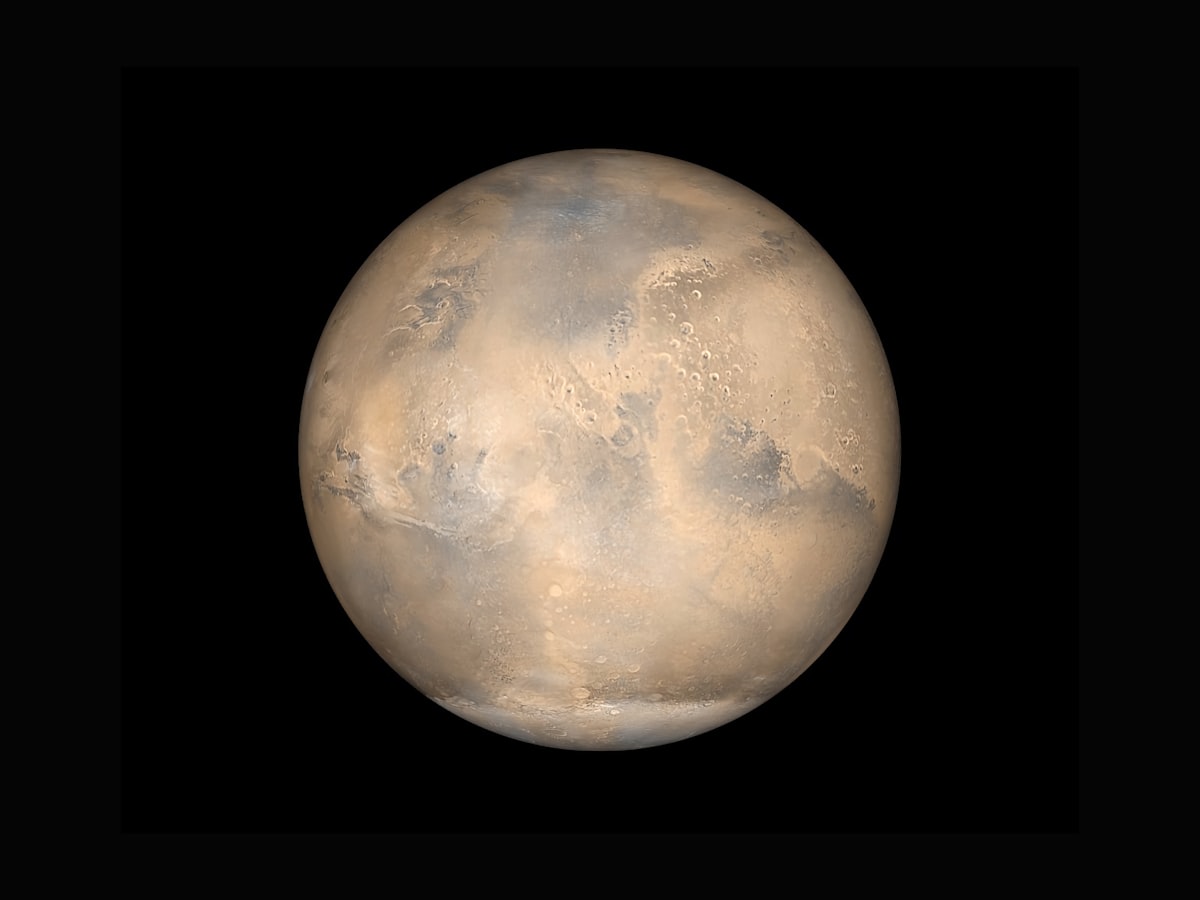
The French contribution to SuperCam, called the Mast Unit, was designed and built under CNES oversight by a consortium of French laboratories led by the IRAP astrophysics and planetology research institute in Toulouse, with contributions from the Midi-Pyrenees Observatory, the LAB astrophysics laboratory in Bordeaux, the LESIA space instrumentation laboratory, and the LATMOS atmospheres and space observations laboratory. The American partner, Los Alamos National Laboratory, built the Body Unit, while the University of Valladolid in Spain contributed the calibration targets.
SuperCam has been spectacularly productive. By its third year of operations, the instrument had fired more than half a million laser shots at Martian rocks, analyzing the chemical and mineral composition of hundreds of targets along Perseverance's traverse through the ancient river delta of Jezero Crater. The microphone recordings — capturing the sound of wind, of the laser striking rock, and of the Ingenuity helicopter's rotors — provided an entirely new sensory dimension to Mars exploration. SuperCam is the successor to ChemCam, an earlier Franco-American instrument aboard the Curiosity rover, establishing a lineage of French laser spectrometers operating on Mars that stretches back to Curiosity's landing in 2012.
SVOM: Hunting Gamma-Ray Bursts with China
The Space Variable Objects Monitor — SVOM — represents one of the most significant Franco-Chinese space collaborations ever undertaken. Launched on June 22, 2024, from the Xichang Satellite Launch Centre in China's Sichuan province aboard a Chinese Long March 2C rocket, the 930-kilogram satellite is a joint mission between CNES and the Chinese National Space Administration (CNSA) and Chinese Academy of Sciences (CAS), designed to detect and study gamma-ray bursts — the most energetic explosions in the universe, produced by the collapse of massive stars and the merger of neutron stars.
SVOM carries four instruments, two of which were designed and built in France: ECLAIRs, a wide-field X-ray and gamma-ray camera that detects gamma-ray bursts in real time, and MXT, a Microchannel X-ray Telescope that provides rapid follow-up observations of newly detected bursts. The Chinese-built instruments include a gamma-ray monitor (GRM) and a visible-light telescope (VT). The satellite operates from a 625-kilometer orbit, and within its first year of operations, SVOM detected more than 250 gamma-ray bursts — well above the projected rate of 70 to 80 per year.
SVOM is notable not only for its science but for its geopolitical context. At a time when US-China space cooperation is effectively prohibited by the Wolf Amendment, and European-Chinese cooperation has become increasingly fraught, SVOM demonstrates France's willingness to maintain scientific partnerships across geopolitical divides — a continuation of the independent diplomatic posture that sent Chretien to Salyut 7 in 1982.
Euclid: Mapping the Dark Universe
The Euclid space telescope, launched on July 1, 2023, from Cape Canaveral aboard a SpaceX Falcon 9, is ESA's flagship mission to map the large-scale structure of the universe and understand the nature of dark energy and dark matter — the two phenomena that together account for approximately 95 percent of the universe's total energy content.
France's contribution to Euclid is extensive. The NISP (Near Infrared Spectro-Photometer) instrument — one of Euclid's two primary science instruments — was developed by an international consortium led by France, through the Institut d'Astrophysique de Paris and CNRS. The Euclid payload module was built by Airbus Defence and Space's Toulouse division. Of the Euclid Consortium's more than 2,200 members across 250 research laboratories in 16 countries, 425 members work at 40 French laboratories — the largest national contingent.
Euclid's first scientific results, released in early 2025, demonstrated the telescope's ability to image millions of galaxies across vast stretches of cosmic time, providing the raw data from which scientists will map the distribution of dark matter through gravitational lensing and trace the expansion history of the universe through galaxy clustering. The mission is expected to observe approximately 1.5 billion galaxies over its six-year primary mission, producing the most comprehensive three-dimensional map of the cosmos ever assembled.
Ocean Altimetry: France's Pioneering Role in Sea-Level Science
One of CNES's most enduring and consequential scientific partnerships began in 1992 with the launch of TOPEX/Poseidon, a joint CNES-NASA satellite altimeter mission to map ocean surface topography. NASA built the TOPEX radar altimeter; CNES built the Poseidon solid-state altimeter. Together, they measured sea-surface height with unprecedented precision, revealing patterns of ocean circulation, tracking El Nino events, and — most critically — establishing the first continuous, satellite-based record of global sea-level rise.
The collaboration proved so productive that it spawned an entire lineage of successor missions: Jason-1 (launched 2001), Jason-2 (2008), Jason-3 (2016), and ultimately the Sentinel-6 Michael Freilich satellite (2020), which continues the unbroken altimetry record today. Together, this series of Franco-American satellites has revealed that global sea level is rising at an average rate of approximately three millimeters per year — accelerating from the roughly two millimeters per year observed in the early 1990s — a finding with profound implications for climate policy and coastal planning.
The TOPEX/Poseidon-Jason lineage represents one of the longest continuous Franco-American space science collaborations in history, spanning more than three decades and five missions. It is a model for how bilateral partnerships can produce scientific results that neither partner could achieve alone.
PLATO: The Next Generation Exoplanet Hunter
Looking ahead, CNES is a major contributor to PLATO (PLAnetary Transits and Oscillations of stars), an ESA medium-class mission scheduled for launch on an Ariane 62 from Kourou in January 2027. PLATO will use 26 cameras to detect and characterize terrestrial exoplanets in the habitable zones of Sun-like stars, addressing one of the most fundamental questions in science: how common are Earth-like planets?
France is one of PLATO's five principal contributing nations, alongside Germany, Italy, the United Kingdom, and Spain. CNES oversees the French contribution, supervising the work of nine laboratories attached to CNRS and CEA (the French atomic energy and alternative energies commission). The PLATO consortium brings together more than 800 members from 89 scientific institutions across 28 countries. If PLATO succeeds in identifying rocky planets in habitable-zone orbits around Sun-like stars — and characterizing those planets' masses, radii, and ages — it will represent one of the most significant discoveries in the history of astronomy, with French instruments and French scientists at its core.
The Indispensable European Space Nation
There is a temptation, when surveying France's space activities, to reach for superlatives and rankings — largest European space budget, most astronauts, most ESA Directors General influence, only independent military space capability. These facts are accurate, but they miss the deeper point. France's significance to European space is not merely quantitative. It is structural.
Remove France from the European space equation and the entire architecture collapses. Without CNES, there is no Guiana Space Centre — and without Kourou, there are no Ariane launches from equatorial latitudes. Without French industrial champions, there are no ISS modules, no Galileo satellites, no Copernicus Sentinels — or at least not at the scale and capability that Europe currently commands. Without French astronauts, the European human spaceflight program loses its deepest bench and its most visible ambassadors. Without French military space infrastructure, Europe has no sovereign reconnaissance, no independent secure communications, no space surveillance capability that is not ultimately dependent on the United States.
This is not an accident. It is the result of six decades of deliberate French policy, driven by the same conviction that created CNES in 1961 and built the first Diamant rocket in 1965: that strategic autonomy in space is not optional for a serious nation, and that France's role is to ensure that Europe, collectively, possesses what France alone cannot sustain indefinitely. The doctrine has evolved — from national sovereignty under de Gaulle to European strategic autonomy under Macron — but the underlying logic has not changed.
The challenges ahead are real. SpaceX's dominance in launch threatens the commercial viability of European rockets. Starlink's scale threatens Eutelsat's broadband ambitions. China's expanding space program is drawing international partnerships away from European offers. And ESA's governance model — multinational, consensus-driven, constrained by juste retour — remains structurally slower and more expensive than the vertically integrated models operated by SpaceX, Blue Origin, and the Chinese state.
France's response, characteristically, has been to invest more rather than less. More funding for Ariane 6 and MaiaSpace. More money for military space under the 2024-2030 planning law. More CNES participation in ESA science missions. More support for French space startups and commercial ventures. The 2025 National Space Strategy, with its 16 billion euros for civil programs and 4.2 billion for military space through 2030, represents the most ambitious French space investment plan in history.
Whether this investment will be sufficient to maintain France's position — and Europe's — against competitors that operate at radically different speeds and scales is the defining question of European space policy in the 2020s. But if history is any guide, betting against France in space has been a losing proposition for sixty years. The nation that put Asterix into orbit in 1965, that built the world's best-located spaceport, that launched the James Webb Space Telescope on Christmas Day 2021, and that trained the astronaut who commanded the International Space Station is unlikely to accept a diminished role in the decades ahead.
L'essentiel est invisible pour les yeux. What is essential is invisible to the eye. But if you know where to look — at the Sentinels monitoring Earth's oceans, at the Galileo signals guiding a billion devices, at the CSO satellites photographing the world at 20-centimeter resolution, at the SuperCam laser firing on Mars — France's space empire becomes very visible indeed.