Space Industry by Country
29 countries, 42+ companies across the global space economy
Countries
29
Regions
5
Companies
42+
Space Agencies
29
Click a country to explore its space industry
North America
2 countries
United States
NASA — NASA / US Space Force
The United States dominates the global space industry with NASA, the US Space Force, and a thriving commercial ecosystem led by SpaceX, Blue Origin, and dozens of public defense contractors. With over $60 billion in combined government space spending and home to the majority of the world's space startups, the US drives launch cadence, satellite broadband, and deep-space exploration.
Canada
CSA — Canadian Space Agency
Canada is renowned for its space robotics expertise, having built the iconic Canadarm and Canadarm2 for the Space Shuttle and ISS. MDA Space and Telesat are major publicly traded space companies, and Canada is contributing the Canadarm3 robotic system to NASA's Lunar Gateway. The Canadian Space Agency partners closely with NASA on exploration and Earth observation.
Asia
4 countries
China
CNSA — China National Space Administration
China has rapidly become the world's second-largest space power, operating its own Tiangong space station, completing lunar sample-return missions, and building a commercial launch sector with companies like LandSpace, Galactic Energy, and iSpace China. The China National Space Administration plans crewed Moon landings by 2030 and is developing an International Lunar Research Station.
India
ISRO — Indian Space Research Organisation
India's space program, led by ISRO, has achieved remarkable milestones including the Chandrayaan-3 lunar landing and the Mangalyaan Mars orbiter on a shoestring budget. A growing private sector with Skyroot Aerospace, Agnikul Cosmos, and Pixxel is transforming India into a global space startup hub, supported by liberalized government policies for commercial space activities.
Japan
JAXA — Japan Aerospace Exploration Agency
Japan is a key player in space exploration and technology, with JAXA contributing to the ISS, asteroid sample-return missions (Hayabusa2), and the H3 launch vehicle. Companies like ispace and Astroscale are global leaders in lunar landing and orbital debris removal, positioning Japan at the forefront of in-orbit services and commercial space innovation.
South Korea
KASA — Korea AeroSpace Administration
South Korea entered the orbital launch club in 2022 with the KSLV-II Nuri rocket and established KASA as a dedicated space agency in 2024. Korea Aerospace Industries leads the country's space manufacturing sector, and ambitious plans include a lunar orbiter, independent GPS constellation, and 100+ satellite mega-constellation for 6G communications by the 2030s.
Europe
20 countries
France
CNES — CNES / ESA
France is the cornerstone of European space activities, hosting ESA's launch operations at the Guiana Space Centre in Kourou and leading Ariane rocket development through ArianeGroup. Home to major satellite operators like Eutelsat and Thales Alenia Space, France has the largest national space budget in Europe and plays a central role in ESA's Earth observation, navigation, and science programs.
Germany
DLR — German Aerospace Center
Germany is Europe's largest contributor to ESA and a hub for commercial space innovation. Companies like Isar Aerospace, Rocket Factory Augsburg, OHB SE, and Mynaric are building next-generation launch vehicles, satellites, and laser communication systems. The German Aerospace Center (DLR) conducts cutting-edge research in propulsion, Earth observation, and planetary science.
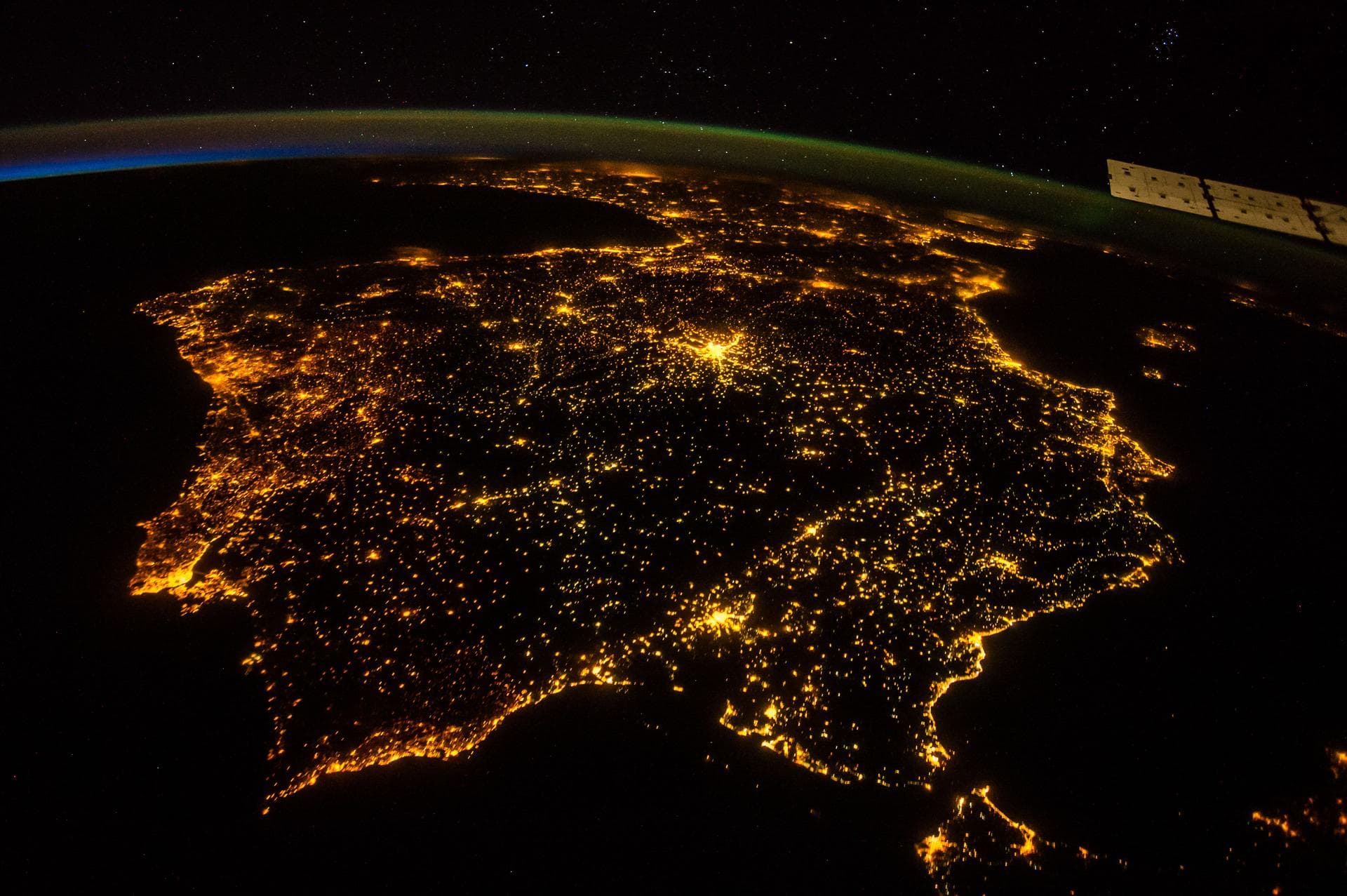
Spain
INTA — INTA / ESA member
Spain is emerging as a European launch competitor through PLD Space, the first private company in continental Europe to launch a suborbital rocket. With growing investment in satellite manufacturing, Earth observation, and ESA partnership programs, Spain is positioning itself as a key node in the European space supply chain alongside traditional leaders France and Germany.
United Kingdom
UKSA — UK Space Agency
The United Kingdom has a growing commercial space sector, anchored by satellite telecommunications, Earth observation, and the UK Space Agency's partnerships with ESA. With new spaceport development in Scotland and Cornwall, plus major investments in OneWeb satellite broadband, the UK aims to capture 10% of the global space market by 2030.
Italy
ASI — Italian Space Agency
Italy has a long spaceflight heritage dating back to the San Marco satellite program in the 1960s. Today, the Italian Space Agency (ASI) is a major ESA contributor, and companies like Thales Alenia Space (Turin) and Avio (Vega rocket) make Italy one of Europe's top space manufacturing nations. Italy also contributed key modules to the International Space Station.
Netherlands
NSO — Netherlands Space Office
The Netherlands hosts ESA's ESTEC technical center in Noordwijk, making it a key hub for European space technology development. Dutch companies and universities contribute to satellite instrumentation, Earth observation science, and interplanetary mission design, while Airbus Defence and Space Netherlands manufactures solar arrays and satellite structures.
Sweden
SNSA — Swedish National Space Agency
Sweden is a key European space nation, home to the Swedish Space Corporation (SSC) which operates the Esrange Space Center above the Arctic Circle and a global network of ground stations. With the Swedish National Space Agency (SNSA) channeling roughly SEK 900 million annually into ESA programs, Sweden contributes to everything from Earth observation to launcher development. The country also hosts OHB Sweden and a growing cluster of space startups focused on sustainable space operations.
Norway
NOSA — Norwegian Space Agency
Norway punches above its weight in space, contributing roughly €161 million to ESA and operating the Andoya Spaceport, one of Europe's first continental orbital launch sites. The Norwegian Space Agency (formerly Norsk Romsenter) focuses heavily on Earth observation, maritime surveillance, and Arctic monitoring, while defense and space company Kongsberg provides critical satellite and communications technology. Norway's high-latitude geography makes it uniquely positioned for polar orbit launches and northern-hemisphere ground station services.
Switzerland
SSO/CH — Swiss Space Office
Switzerland is ESA's seventh-largest contributor, committing CHF 781 million at the latest Ministerial Council, and is home to world-class space institutions including EPFL's eSpace center and the Swiss Space Office. The country leads in orbital sustainability through ClearSpace, which holds an €86 million ESA contract for the first-ever space debris removal mission. RUAG Space, headquartered in Zurich, is Europe's largest independent supplier of satellite structures and launcher payload fairings.
Belgium
BELSPO — BELSPO / ESA member
Belgium is ESA's fifth-largest donor, contributing €296 million in 2024, and serves as the organizational heart of European space with ESA's headquarters located in Paris but key facilities and the Von Karman Institute for Fluid Dynamics based in Belgium. BELSPO (Belgian Federal Science Policy Office) manages Belgian space activities, while companies like SABCA and Thales Alenia Space Belgium contribute to launcher and satellite manufacturing. Belgium's total annual space investment exceeds €350 million across all programs.
Austria
ALR — Aeronautics and Space Agency (ALR/FFG)
Austria contributes approximately €60 million annually to ESA and an additional €30 million to EU space programs, with the Aeronautics and Space Agency (ALR) coordinating national space activities within the Austrian Research Promotion Agency (FFG). Austrian companies and research institutes specialize in satellite instrumentation, space-qualified electronics, and high-precision mechanical systems. RUAG Space Austria and a cluster of SMEs supply components for ESA flagship missions including Copernicus and Galileo.
Portugal
PT Space — Portugal Space
Portugal is building a unique position in European space through the development of the Santa Maria Spaceport in the Azores, which received its first operating license in 2025 for suborbital and future orbital launches in the mid-Atlantic corridor. Portugal Space, the national space agency established in 2019, coordinates ESA participation and has secured ESA's Space Rider reusable vehicle landing site on Santa Maria Island. The country's growing space downstream ecosystem includes over 100 companies leveraging satellite data and communications.
Denmark
DTU Space — DTU Space / Ministry of Higher Education
Denmark has a strong heritage in space science led by DTU Space (Technical University of Denmark's National Space Institute), which holds scientific leadership of major ESA missions and collaborates with NASA on instruments for deep-space probes. The country's commercial sector includes GomSpace, one of the world's leading nanosatellite manufacturers, and Terma, which provides star trackers and power systems for ESA spacecraft. Denmark has recently increased its ESA contributions significantly, with a record government investment proposed in 2025.
Finland
FMI/Space — Ministry of Economic Affairs / ESA Delegation
Finland has rapidly emerged as a European space powerhouse, increasing its ESA contribution by 59% to €233 million for the 2023-2025 period, with a focus on Earth observation, security, and telecommunications. The Finnish Meteorological Institute's space division leads atmospheric and space weather research, while ICEYE, a Finnish SAR satellite unicorn, operates the world's largest synthetic-aperture radar constellation. Finland's space sector has grown from a handful of companies to over 100 space-active firms in the past decade.
Luxembourg
LSA — Luxembourg Space Agency
Luxembourg punches far above its weight in space, ranking among ESA's top five per-capita contributors and hosting SES, one of the world's largest satellite operators. The Luxembourg Space Agency oversees a thriving ecosystem of 80+ space companies employing some 1,650 people, while the pioneering SpaceResources.lu initiative and the European Space Resources Innovation Centre (ESRIC) position the country as a global leader in space resource utilization. Luxembourg was also the first European country to pass legislation on space resource ownership rights.
Greece
HSC — Hellenic Space Centre
Greece established the Hellenic Space Centre (HSC) in 2019 and is rapidly scaling its space ambitions with a €60 million investment in the Greek National Small Satellite Program, which will deliver seven Earth observation satellites by 2026. As an ESA member since 2005, Greece participates in Copernicus, Galileo, and space science programs. The country's growing space ecosystem leverages strong academic institutions and its strategic Mediterranean location for ground station operations and maritime monitoring applications.
Poland
POLSA — Polish Space Agency
Poland has become one of ESA's fastest-growing contributors, ranking ninth among member states with total public space investment reaching €237 million in 2024. The Polish Space Agency (POLSA) coordinates national activities, while Creotech Instruments, Poland's leading satellite manufacturer, secured a landmark €52 million ESA contract to build the CAMILA Earth observation constellation. In 2024, Polish entities signed 153 ESA contracts worth nearly €87 million, reflecting the country's rapidly maturing space industrial base.
Czech Republic
CSO — Ministry of Transport (Czech space coordination)
The Czech Republic has been an ESA member since 2008 and has built a strong niche in space instrumentation, with companies like SAB Aerospace manufacturing satellite structures and propulsion components for ESA missions. The Ministry of Transport contributes approximately €59 million annually to ESA across mandatory and optional programs, following the closure of the Czech Space Office in 2024. Czech institutions excel in radiation-hardened electronics, space weather instruments, and small satellite technology through organizations like the Czech Aerospace Research Centre.
Romania
ROSA — Romanian Space Agency
Romania became ESA's 19th member state in 2011, building on a space heritage that dates back to the country's early rocket and satellite experiments. The Romanian Space Agency (ROSA) manages ESA participation and national space programs, with Romanian companies and universities contributing to Earth observation data processing, satellite subsystems, and ground segment operations. Romania's space sector is growing steadily, with participation in ESA's Copernicus, telecommunications, and space safety programs increasing year over year.
Ireland
EI/ESA — Enterprise Ireland / ESA Delegation
Ireland marks 50 years of ESA membership and has seen its space sector grow from 30 companies to 116 space-active firms, winning a record €24.6 million in ESA contracts in 2024. Enterprise Ireland supports the sector alongside the Irish Delegation to ESA, while companies like ENBIO (spacecraft thermal coatings used on ESA's Solar Orbiter), Réaltra Space Systems Engineering, and ÉireComposites deliver critical components for European missions. Ireland also launched its first satellite, EIRSAT-1, which completed its mission successfully.
Middle East
2 countries
Israel
ISA — Israel Space Agency
Israel punches well above its weight in space technology, with a robust defense-driven satellite industry and innovative startups like SpaceIL, which nearly landed on the Moon with its Beresheet lander. The Israel Space Agency collaborates with NASA and ESA, and the country's expertise in miniaturized satellites, Earth observation, and space communications makes it a key player in the global space economy.
United Arab Emirates
UAESA — UAE Space Agency
The UAE has rapidly built one of the most ambitious space programs in the Middle East, successfully sending the Hope Probe to Mars orbit in 2021 and planning the MBR Explorer asteroid belt mission. The Mohammed bin Rashid Space Centre and the UAE Space Agency are investing heavily in satellite manufacturing, astronaut training, and a long-term vision for Mars settlement.
Explore the Space Economy
Dive deeper into companies, programs, and market analysis